News And events

+97125556034 bestbullionllc@outlook.com
15 June,2020
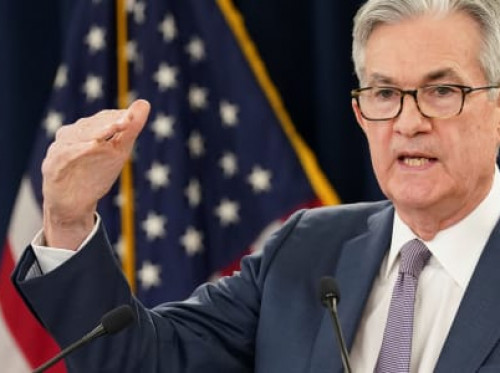
The Federal Reserve kept interest rates near zero and indicated that’s where they’ll stay as the economy recovers from the coronavirus pandemic.
“We’re not thinking about raising rates. We’re not even thinking about thinking about raising rates,” Fed Chairman Jerome Powell said. “What we’re thinking about is providing support for the economy. We think this is going to take some time.”
Along with the rate decision, central bankers projected Wednesday that the economy will shrink 6.5% in 2020, a year that saw an unprecedented halting of business activity in an effort to combat the coronavirus pandemic. However, 2021 is expected to show a 5% gain followed by 3.5% in 2022, both well above the economy’s longer-term trend.
The central bank repeated its commitment from the April meeting that it “expects to maintain this target range until it is confident that the economy has weathered recent events and is on track to achieve its maximum employment and price stability goals.”
The Fed also said it will continue to increase its bond holdings, targeting Treasury purchases at $80 billion a month and mortgage-backed securities at $40 billion.
The Federal Open Market Committee met this week as states begin to reopen and after unemployment saw its worst monthly drop in history followed by its biggest gain. In addition, the meeting comes the same week the National Bureau of Economic Research declared that a recession started in February, ending the longest expansion in U.S. history.
Powell said the economic projections were made with the “general expectation of an economic recovery beginning in the second half of this year and lasting over the next couple of years, supported by interest rates that remain at their current level near zero.”
In early march, the Fed slashed the target range for its overnight funds rate to 0%-0.25%, where it last was during the financial crisis. The rate serves as a benchmark for short-term bank borrowing and also as a guide for most consumer borrowing.
Fed officials skipped releasing their quarterly economic projections at March meetings as uncertainty permeated over how long the U.S. would remain in stay-at-home mode and how deep the damage would be.